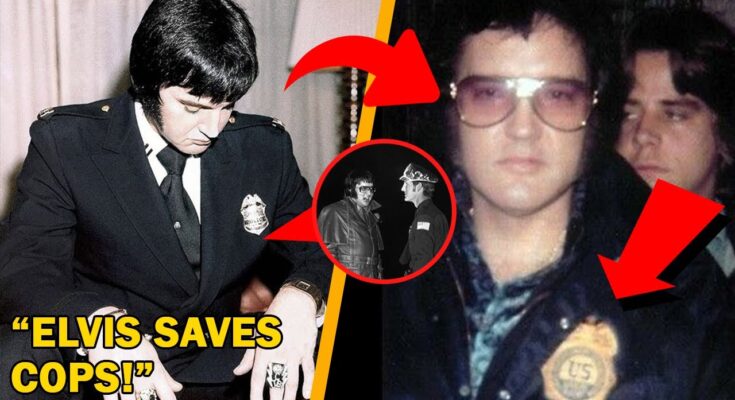
One quiet night in Memphis in the early 1970s, an unexpected encounter unfolded between Elvis Presley and local police officers, revealing a lesser-known side of the King of Rock and Roll. This remarkable incident, often overshadowed by his legendary career, showcased Elvis’s deep admiration and respect for law enforcement.
While driving through the city, Elvis noticed two officers struggling with a suspect resisting arrest. Rather than simply passing by, he made a split-second decision that would leave a lasting impression. Dressed in his signature police-style attire—complete with a badge he cherished—Elvis stepped out of his car and approached the scene. His presence alone shifted the energy, momentarily stunning everyone involved.
The officers, initially caught off guard, watched as Elvis calmly introduced himself and addressed them by rank, demonstrating his genuine respect for their authority. He then turned to the suspect, speaking in a firm yet reassuring tone, urging cooperation and de-escalating the situation. Witnesses later recalled how surreal it was to see the global superstar take charge, not with force, but with a presence that commanded peace and understanding.
Those close to Elvis, including Sheriff Bill Morris of Shelby County, often spoke of his fascination with law enforcement. He was known to visit police stations unannounced, sharing coffee and conversations with officers, eager to learn about their experiences. His support wasn’t just symbolic—he contributed to police departments in need, quietly donating equipment and even vehicles, all without seeking recognition.
This deep respect for those who served extended to his personal security team as well. Bodyguard Sonny West recalled that Elvis often stepped in to defuse tense situations during public appearances, proving that his protective instincts were more than just admiration—they were part of who he was.
That night in Memphis, Elvis’s intervention not only helped the officers gain control but also fostered a moment of solidarity. The tension dissipated, replaced by relief and gratitude from the officers who had witnessed firsthand the kindness behind the icon. For them, and for many who heard the story afterward, it was a testament to Elvis’s unwavering support for law enforcement—not as a performer, but as a man who genuinely cared.
This lesser-known chapter in Elvis’s life serves as a reminder that beyond the glitz and glamour, he was a person who valued duty, courage, and community. His actions that night reflected not just admiration for those who protect and serve, but a willingness to stand beside them. As stories of his generosity and kindness continue to surface, they reveal the full depth of his character—a legend not only in music but in humanity as well.


